
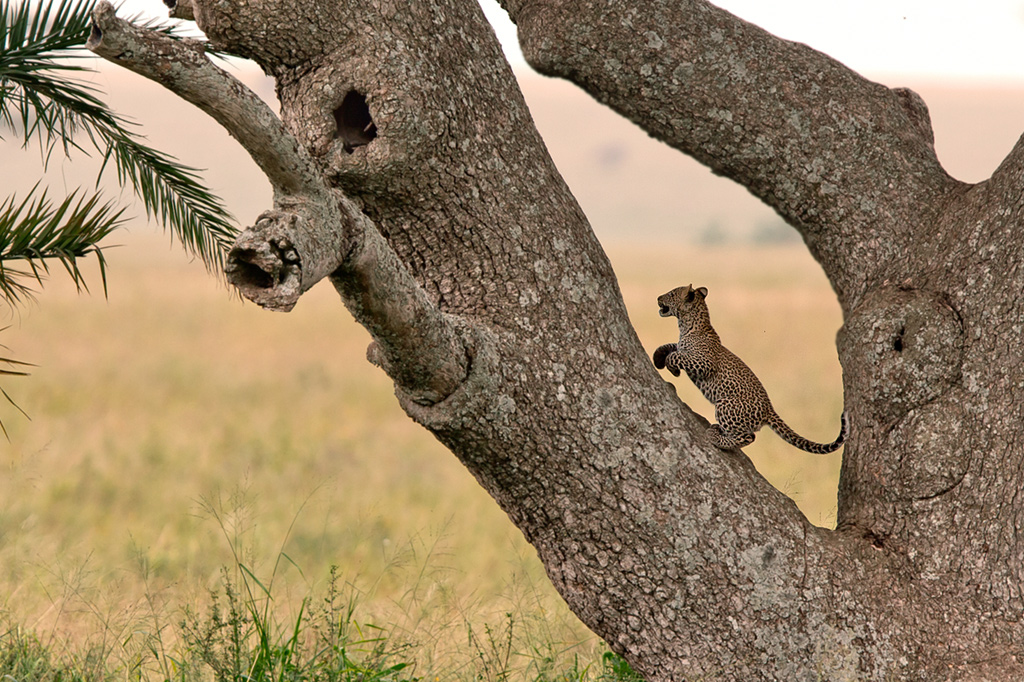
The Most Elusive of the Big Five
Leopards are solitary, largely nocturnal, and built for concealment — each rosette pattern is unique and breaks up the cat’s outline in dappled light. Unlike lions, a leopard hunts and lives alone, relying on stealth rather than numbers. After a kill, it will often haul the carcass up into a tree, both to feed undisturbed over several days and to keep it away from hyenas and lions, which cannot climb to retrieve it.
A mother leopard keeps her cubs hidden in dense thickets, rocky crevices or hollow trees for their first weeks of life, moving them between den sites to avoid detection by predators. Cubs stay with her for well over a year, learning to stalk and climb before hunting independently — which is why a leopard with cubs, or a cub alone in a tree, is one of the rarer and more prized sightings on safari.
Where to See Leopards
Riverine forest is the key habitat to watch: the branches of acacia and fig trees along waterways in the Masai Mara and the Serengeti’s Seronera area hold some of the most consistent leopard sightings in East Africa. Samburu National Reserve in northern Kenya is also known for strong leopard numbers, particularly in the dry season when animals concentrate along the Ewaso Nyiro River.
Best Time to Go
Dawn and dusk are the most productive windows, when leopards move between resting spots and hunting grounds. The dry season improves visibility generally, as thinner vegetation makes a resting leopard easier to spot in the trees along riverbanks.
Plan Your Leopard Safari
Finding a leopard takes a guide who knows exactly which trees and river bends to check — it is the sighting that rewards patience more than any other on the Big Five list. We build routes around the riverine habitat where leopard sightings are strongest for your travel dates.