Wildlife
Reticulated Giraffe: The Most Striking Giraffe and Where to See It in Kenya
The reticulated giraffe of northern Kenya has the boldest coat pattern of any giraffe. How to tell it from the Masai and Nubian giraffes, and where to see it.
The reticulated giraffe is the giraffe with the boldest pattern of all: large, neat, liver-red patches separated by a network of bright white lines, as if the animal had been painted. It lives in the dry north of Kenya, southern Ethiopia and Somalia, and for most safari travellers it means a trip to Samburu or Laikipia. Seeing one alongside the Masai giraffe of the south shows how different the giraffes of East Africa really are.
East Africa’s giraffes
Three kinds of giraffe live in Kenya, Tanzania and Uganda, and their coats are the easiest way to tell them apart:
- Reticulated giraffe: large, smooth-edged, red-brown polygons with crisp white lines between them, extending down the legs. Found in northern Kenya.
- Masai giraffe: irregular, jagged patches, often described as looking like vine leaves or stars, in shades of brown on a cream background. This is the giraffe of the Masai Mara, Amboseli, the Serengeti and most of Tanzania, and Tanzania’s national animal.
- Nubian giraffe: often called Rothschild’s giraffe, with large, blotchy patches, a cream background and white lower legs without spots, as if wearing socks. Found in Murchison Falls National Park and Kidepo in Uganda, and introduced to Lake Nakuru and other sites in Kenya.
Genetic research has suggested that these giraffes may be separate species rather than subspecies of a single giraffe, and the question is still being debated. Either way, they look very different and have lived apart for a long time.
How reticulated giraffes live
Like all giraffes, reticulated giraffes are browsers, feeding mainly on the leaves of acacias and other trees and shrubs, which they strip with their long, flexible tongues. In the dry north they get much of their water from leaves and can go for long periods without drinking. They live in loose herds whose membership changes often, and males compete for females by “necking”, swinging their heavy necks and heads against each other in contests that range from gentle sparring to serious fights.
A giraffe in trouble
Giraffe numbers across Africa fell steeply in the late twentieth century, and the reticulated giraffe was among the hardest hit, through habitat loss, poaching, drought and conflict. Today there are fewer than 20,000 left, and the species is listed as endangered. In northern Kenya, community conservancies and conservation groups now monitor giraffes, protect water points and work with herders to reduce conflict, and in some areas numbers have stabilised or begun to recover.
Where to see reticulated giraffes
- Samburu, Buffalo Springs and Shaba national reserves, where they are common along the Ewaso Nyiro River and in the surrounding bush.
- Laikipia, including Ol Pejeta, Lewa and the other conservancies of the plateau.
- Meru National Park, east of Mount Kenya.
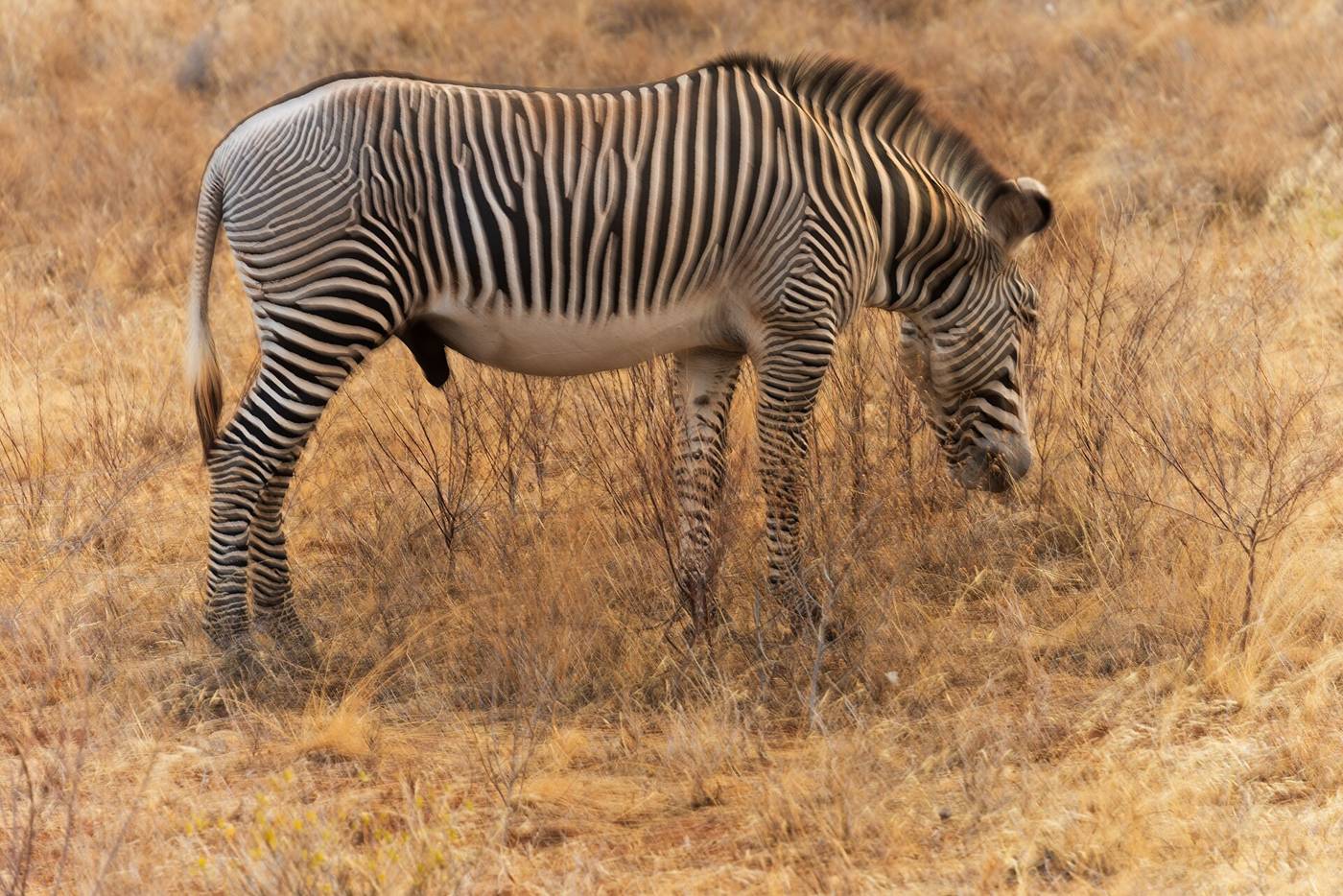
A visit to the north also brings the Grevy’s zebra, Beisa oryx, gerenuk and vulturine guineafowl, all of which are absent from the south.
Adding the north to your safari
Our 10-day Kenya itinerary includes Samburu and Ol Pejeta, and our Masai giraffe guide covers the giraffe you will meet in the Mara and the Serengeti.

We plan private safaris across Kenya, Tanzania, Uganda and Rwanda, and write from time spent in these parks.